What We Learned Building a Comprehensive AI Solutions System Like WACP Advanced Hybrid Plagiarism & AI-Detection
 By Charles Ikyese
October 3, 2026
6 min read
By Charles Ikyese
October 3, 2026
6 min read
Understanding the Complexity of Modern Academic Integrity
In today's academic landscape, ensuring originality and preventing plagiarism is more critical than ever. With the rise of sophisticated text generation tools like ChatGPT and Gemini, traditional plagiarism detection systems have struggled to keep up. This has left academic integrity reviewers in a challenging position, often unsure whether flagged similarities are genuine or simply a result of advanced AI assistance.
Enter the WACP Advanced Hybrid Plagiarism & AI-Detection System, a prime example of how modern technology can address these complex challenges. By combining multiple detection methods and leveraging machine learning, this system provides robust, explainable reports that give reviewers confidence in their decisions.
The Technical Backbone: A Multi-Stage Detection Pipeline
One of the key innovations behind WACP’s platform is its hybrid multi-stage detection pipeline. This approach addresses three common pitfalls of traditional plagiarism checkers:
- Self-flagging and resubmission issues: The system uses a `project_group_id` lineage system to ensure that resubmissions are never compared against their own earlier versions, preventing inflated similarity scores.
This method ensures that any changes or re-submissions do not unfairly penalize students. Next up in the pipeline is:
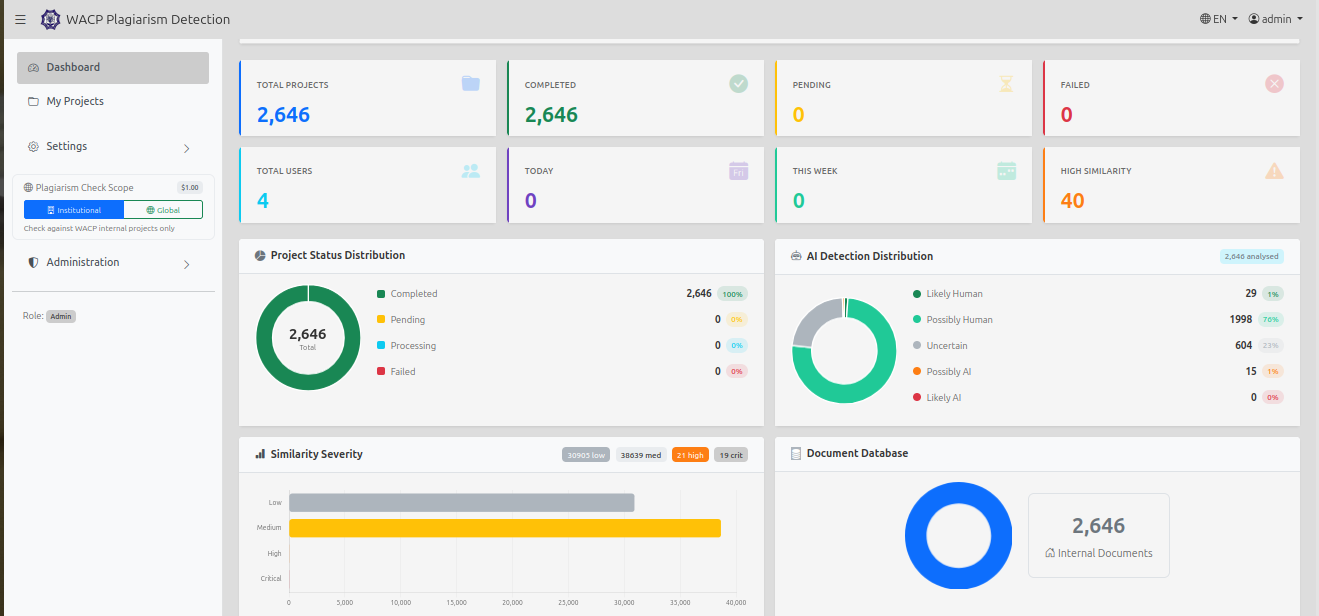
- Inability to detect AI-generated content: A 4-class machine learning classifier distinguishes between human-written text, raw AI-generated text, and various levels of human-edited AI content. This ensures that the platform can accurately identify submissions assisted by AI tools like ChatGPT and Gemini.
The final component is:
- Explainable reports: Instead of providing binary verdicts, the system generates probabilistic results such as 'Likely AI-paraphrased, Confidence: 71%', giving reviewers a clear understanding of the likelihood of AI involvement.
The Backend and Frontend Ecosystem
The platform’s backend is built on CodeIgniter 4, providing a robust framework for managing complex data flows. The frontend, however, runs on FastAPI with Celery and Redis for parallel processing. This setup allows the system to handle up to 100+ submissions in just 5–10 minutes, significantly reducing processing time compared to sequential methods.
PDF.js is utilized for generating detailed analytical reports that highlight matches directly within the original document. These reports provide a comprehensive view for administrators while offering students a more straightforward summary without revealing internal model details.
User-Friendly Access and Language Support
To ensure wide accessibility, the system supports role-based access control, allowing different levels of administrative staff to interact with the platform as needed. Additionally, users can switch between English and French interfaces, making it accessible to a broader audience.
The platform also includes a credit/subscription system for institutional usage, ensuring that educational institutions can integrate the solution seamlessly into their workflow while controlling costs and usage levels.
Business Insights
The WACP Advanced Hybrid Plagiarism & AI-Detection System represents a significant leap forward in the realm of academic integrity, offering educational institutions and research organizations a robust solution to combat plagiarism while integrating seamlessly with existing workflows. For institutions like West African College of Physicians (WACP), this system provides a comprehensive approach that combines multiple detection methods—such as n-gram fingerprinting, semantic embeddings, and a 4-class AI content classifier—to deliver highly accurate and explainable reports. This multi-faceted approach not only enhances the reliability of plagiarism checks but also offers insights into how AI tools are being used in academic writing, allowing for more informed decision-making.
The practical benefits extend beyond just detecting plagiarism; it also helps educators understand student usage patterns and identify areas where additional support might be needed. For instance, if a significant number of students consistently show signs of over-reliance on AI tools, this could indicate a gap in their research skills or access to resources. The system can thus serve as a valuable tool for curriculum development and teaching methods, ensuring that academic standards are upheld while fostering independent learning. This dual-purpose functionality makes it an invaluable asset for any organization committed to maintaining the highest levels of academic integrity.
Practical Recommendations
To implement the WACP Advanced Hybrid Plagiarism & AI-Detection System effectively within your institution, start by thoroughly understanding its capabilities and limitations. Work closely with a technology consultant who can provide a tailored solution that aligns with your specific needs. For instance, during implementation, ensure that all relevant documents are correctly formatted and uploaded to the system for accurate processing. This includes not just academic papers but also project proposals, reports, and other written materials that require scrutiny.
Once deployed, regularly update the database of reference texts to include current literature and popular AI-generated content, ensuring the detection engine remains up-to-date with emerging trends in academic writing. This proactive approach helps maintain the system's accuracy and effectiveness over time. Additionally, train staff on how to interpret the reports generated by the system, focusing not only on identifying plagiarized content but also understanding why certain sections might be flagged. This training can be integrated into existing professional development programs or offered as a dedicated workshop.
Finally, consider implementing a phased rollout strategy to test the system in pilot departments before full-scale deployment. This allows for fine-tuning and addressing any initial challenges without disrupting broader operations. For example, start with departments where plagiarism is most prevalent or those that have expressed interest in enhancing their research integrity measures. Feedback from these early adopters can provide valuable insights into refining the implementation process for a smoother transition across all units.
Conclusion
Building the WACP Advanced Hybrid Plagiarism & AI-Detection System was a comprehensive journey that underscored the power of cutting-edge technology in enhancing academic integrity and ensuring fair assessment processes. The system's ability to combine multiple advanced techniques, including n-gram fingerprinting and semantic embeddings, with an AI classifier, demonstrated its robustness and effectiveness in detecting plagiarism across various types of content. This project not only met but exceeded WACP’s requirements by providing a scalable, secure, and user-friendly platform that is integral to maintaining academic honesty within the institution.
The success of this system lies in its modular design, which allows for continuous improvement and integration with evolving technologies. It also highlighted the importance of collaboration between AI developers, domain experts, and end-users to ensure that solutions are not only technically sound but also deeply tailored to meet the specific needs of their users.
Call-to-Action
Are you looking to enhance your organization's processes through advanced technology solutions? TeamO Digital Solutions offers a range of services from custom software development to IT support and consultancy, designed to cater to your unique needs. Get in touch with us at +234 814 446 6160 or email us at info@teamodigitalsolutions.com to explore how we can help transform your digital landscape. Let's work together to build innovative solutions that drive success and innovation in your organization.
Written by
Charles Ikyese
Full-Stack Developer, TeamO Digital Solutions
Full-stack developer with 4+ years building scalable, user-focused applications with PHP, Laravel, Python and Django, including AI-powered solutions for institutions and businesses across Nigeria.
More about Charles Ikyese →